Szczecin is one of Poland’s most fascinating cities, shaped by river trade, maritime ambition and centuries of shifting borders. Today it is the capital of the West Pomeranian Voivodeship and one of the most important urban centres in north-western Poland, but its story reaches back more than a thousand years.
The city’s earliest roots can be traced to a West Slavic Pomeranian settlement on what is now Castle Hill. By the 8th century, this area had become an established place of settlement, helped by its strategic position on the Oder River. Although Szczecin is often associated with the Baltic Sea, the city itself sits inland, with the river and port system connecting it to the coast and wider Baltic trade routes.
By the early Middle Ages, Szczecin had grown into an important stronghold and trading centre. Its position made it valuable to rulers, merchants and missionaries alike. In 1124, during the Christianising missions of Bishop Otto of Bamberg, the people of Szczecin were baptised, marking a major turning point in the city’s religious and cultural history.
A defining moment came in 1243, when Duke Barnim I granted Szczecin town rights based on the Magdeburg model. This helped shape its medieval development, giving the city a stronger legal and commercial framework. As Szczecin expanded, it became closely linked with the Duchy of Pomerania and the House of Griffins, the dynasty that ruled the region for centuries.
The Griffin dukes left a lasting mark on the city. Szczecin became an important seat of power within the Duchy of Pomerania, and the Pomeranian Dukes’ Castle remains one of the most visible reminders of that era. In the late 15th century, Duke Bogislaw X unified the Duchy of Pomerania and made Szczecin its capital, strengthening the city’s political importance in the region.
Trade also played a central role in Szczecin’s rise. During the 13th and 14th centuries, the city was connected to the Hanseatic world, the powerful network of northern European trading towns. Grain, fish, timber and other goods moved through its markets and waterways, linking Szczecin with ports and merchants across the Baltic and beyond.
The city’s prosperity was not only built on commerce, but also on craft and urban life. Medieval Szczecin developed churches, civic buildings, guilds and a growing merchant class. Its position between Central Europe and the Baltic gave it a character that was both inland and maritime, local and international.
In the 17th century, Szczecin entered another dramatic chapter. During the Thirty Years’ War, Swedish forces arrived in the city in 1630. After the death of Bogislaw XIV, the last Griffin duke, in 1637, Pomerania’s future became the subject of wider European power struggles. The Peace of Westphalia in 1648 confirmed Swedish control over western Pomerania, including Szczecin.
Under Swedish rule, the city became an important fortress and military centre. Its location made it valuable in the rivalry between Sweden, Brandenburg and Prussia. Fortifications were expanded, and Szczecin’s role as a strategic gateway in the southern Baltic became increasingly significant.
That Swedish period ended in 1720, when Szczecin, then widely known by its German name Stettin, came under Prussian rule through the Treaty of Stockholm. For more than two centuries, the city formed part of Prussia and later Germany. During this period, Szczecin developed as a major regional port, industrial centre and administrative capital of Pomerania.
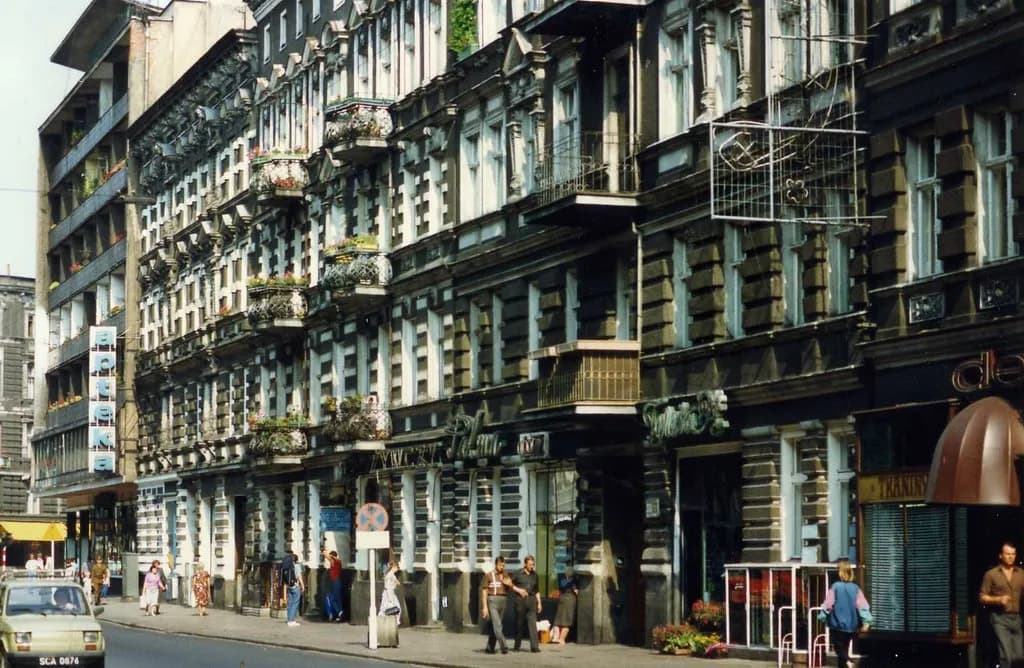
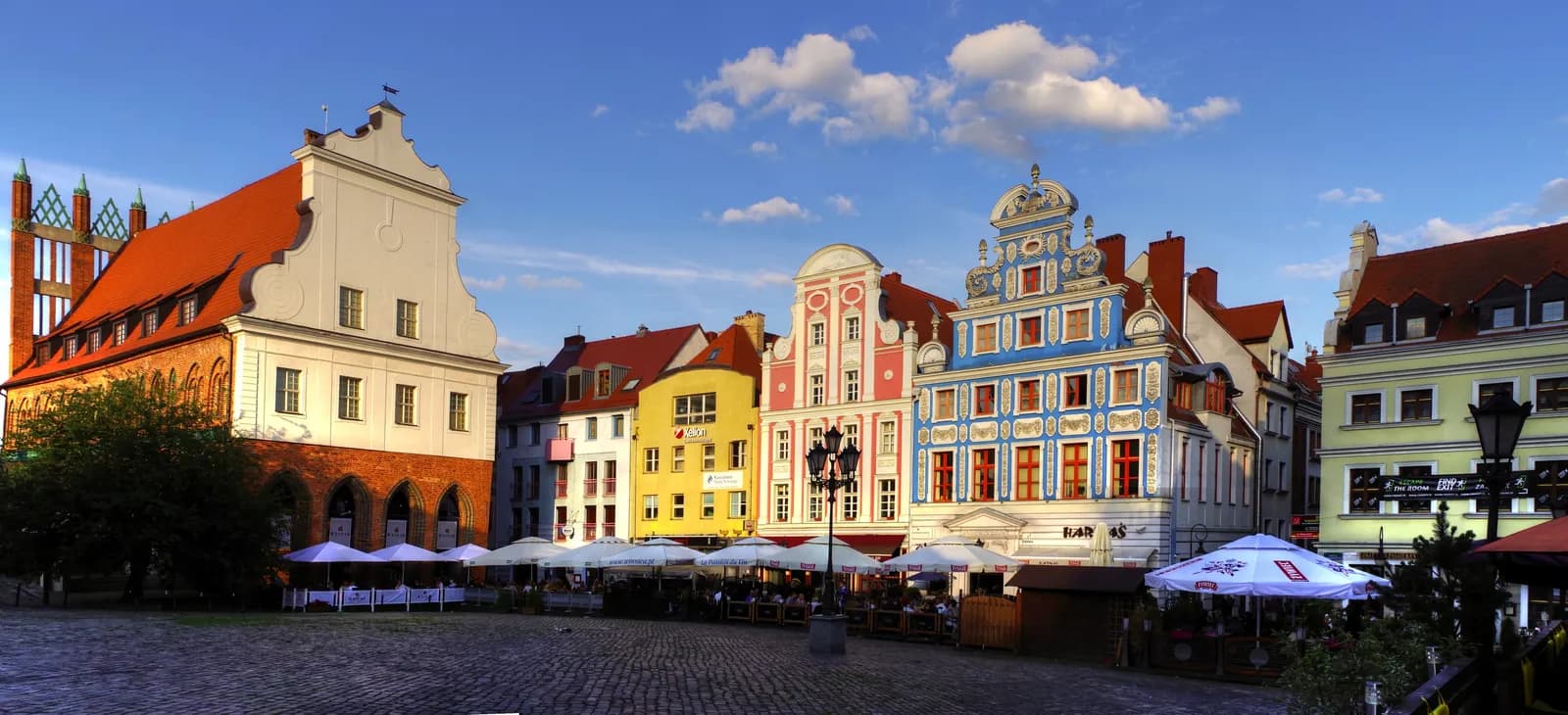
The 19th century brought major urban and economic change. Once the old fortress restrictions were removed in the 1870s, Szczecin expanded rapidly. New streets, squares, public buildings and grand tenements reshaped the city. Its port and industry grew, while shipbuilding, manufacturing and trade gave Szczecin a stronger place in the economy of the German Empire.
The Second World War brought destruction and upheaval. In 1945, Soviet forces occupied the city, and Szczecin was placed under Polish administration. The official takeover by the Polish authorities took place on 5 July 1945. This marked one of the most dramatic changes in the city’s history, as Stettin became Szczecin and the population, language and political identity of the city changed profoundly.
Post-war Szczecin was rebuilt as a Polish city. New residents arrived from different parts of Poland, including areas lost in the east after the war. They inherited a damaged city with a complex past and began the long process of reconstruction, renewal and reinvention.
Today, Szczecin is a modern Polish city with a distinctly European history. Its port remains central to its identity, operating as part of the wider Szczecin-Świnoujście port complex, one of Poland’s key maritime and logistics hubs. The port handles general cargo, bulk goods, containers, steel products and specialist cargo, continuing the city’s long relationship with trade and transport.
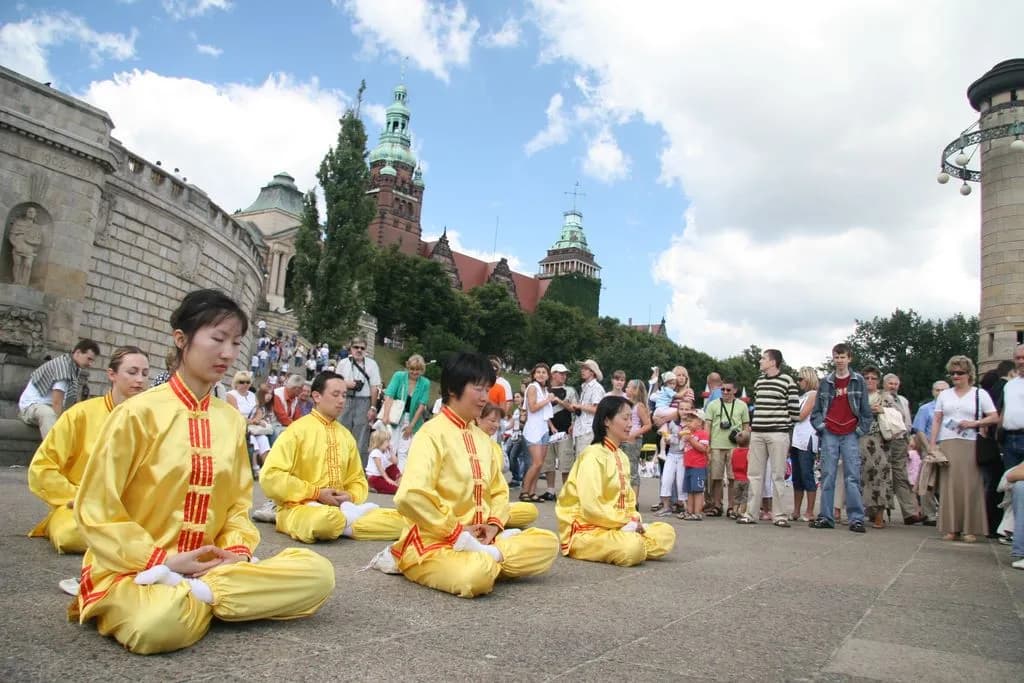
Szczecin’s history cannot be reduced to one culture or one period. It has been shaped by Pomeranian, Polish, Swedish, Prussian and German influences, each leaving traces in its architecture, institutions and memory. From its early stronghold on Castle Hill to its modern role as a port city and regional capital, Szczecin remains a place where Central Europe meets the Baltic world.